
The Global Messenger
of The Global Methodist Church
Collection of devotionals, essays, and reflections from members
The Global Messenger of the Global Methodist Church is the official blog of the GMC, a collection of devotionals, essays, messages, and faith-filled reflections from members and leaders of Global Methodist Church.
If you have a story, reflection, or insight to share we would love to feature your voice on Global Messenger!
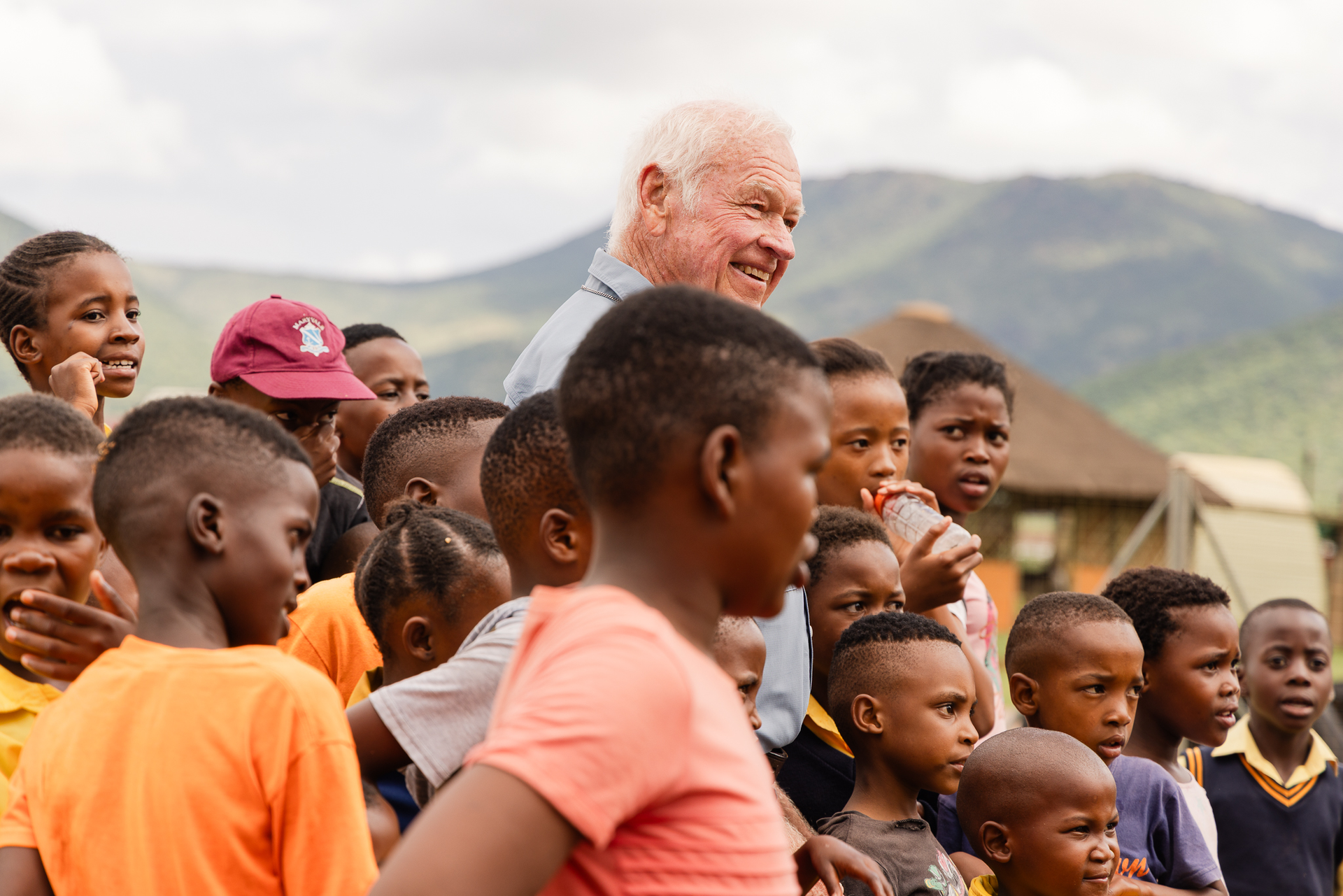
Before a well is drilled, before a meal is served, before a child receives school supplies, something even more important happens. Someone shows up. Throughout Scripture, God's love is revealed through His presence. When Adam and Eve sinned, God came looking for them. When Israel suffered in Egypt, God heard their cries. And in the greatest act of love the world has ever known, Jesus came to dwell among us. He didn't love humanity from a distance. He entered our world. As followers of Christ, we are called to do the same. In South Africa, clean water, nutritious meals, educational opportunities, and spiritual development reach thousands of children. Those ministries change lives, but they all begin with relationships. Before physical needs can be met, people are known by name, their stories are heard, and they are reminded they are seen, valued, and loved by God. Mission teams do plenty of practical work: fitting children for shoes, serving meals, planting gardens. None of that is the real reason they matter. What sticks with people, long after a team has flown home, is being worshiped alongside, played with on a dusty playground, and prayed over by name. In a world that is growing increasingly disconnected, being present is a profound expression of the Gospel. When we choose to be with people instead of merely doing things for them, we represent the heart of Christ. Not everyone is called to travel across the world, but every believer is called to the ministry of presence. For one person, it might mean a weekly visit to a lonely neighbor. For another, it might be a quiet, faithful habit of praying for a missionary by name. Wherever God has placed us, we have opportunities to make His love tangible by simply showing up. The Gospel is more than words. It is God's love made visible through His people. When we choose to be present, Christ is still drawing near to His children through us. Dr. Jim Blessman is the founder and president of Blessman International, a Christian ministry dedicated to sharing the love of Christ by serving vulnerable children and families throughout South Africa.
By Bishop Jeff Greenway The Apostle Paul draws from the Ten Commandments as he gives instructions for how children should honor their parents—and a father’s responsibility to live a life worthy of being honored: “Children, obey your parents in the Lord, for this is right. ‘Honor your father and mother’—which is the first commandment with a promise— ‘so that it may go well with you and that you may enjoy long life on the earth.’ Fathers, do not exasperate your children; instead, bring them up in the training and instruction of the Lord. ” (Ephesians 6:1-4) There isn’t a parent or child that doesn’t realize this is sometimes easier said than done, but it’s important for us to get this relationship right—or it can be very difficult to be obedient child who honors our Heavenly Father. It’s Father’s Day in the United States. It can be a day of mixed emotions for many of us... Some of us look forward to this day with anticipation and will honor the men who have helped give and nurture us in life, but others are hurting, lonely and may even stay away from worship because of the pain today brings. Some of us had dads who checked all the boxes for being a great role model in our lives, but others didn’t and struggle with our cultural expectations for the day, Some of us had dads who instilled grace and confidence in our lives, but others had fathers who struggled so much with their own brokenness they couldn’t emotionally invest in us. Some of us had dads who were present and engaged in our lives and we never doubted their love and support. While others had fathers who were absent and distant. We’ve never quite been sure how they felt about us and are still searching for acceptance. Some of us have dads who lived before us a life that became the Gospel, but others had fathers whose words and actions have made it more difficult to see and trust God as a good heavenly Father. Some of us still have our dads and we’ll spend part of today with them, but some of us have lost our dads and the separation of death brings tears to our eyes and a dull ache to our hearts. Some of us are called “Dad” and know the special joy of raising children, but others aren’t and are well acquainted with the ache of unfulfilled dreams. Some of us are not biological fathers, but we have been called and gifted to help raise other people’s children. Some of us will see and be honored by our kids today, but others have lost a child and know far too well the truth that we weren’t created to bury our children. It's Father's Day. We honor and celebrate the dads who can celebrate today. We also pray for and acknowledge those who can’t. And in all things, we remember our Heavenly Father is good.
By Bishop Leah Gregory
By Vatroslav Župančić, Central Europe Annual Conference Ecumenism is a term that derives from the ancient Greek word (οἶκος ) oikos, which means house or household as the basic unit of society. From that term, we derive today's concepts of economy and of the word oikouménē or ecumenism. Ecumenism precisely means: "The inhabited, or civilized world," but is used today to describe the Christian church as a world wide unified body of believers, both clergy and laity, but spread and distributed in various forms of what we know as churches, denominations or parachurch organisations. By the same name, ecumenical, we are calling the early church councils such as the Constantinople-Nicaea council (whose 1700th anniversary we celebrated last year), because they have a general importance and codified the beliefs of the universal church that was spread through the whole known world of that time. Today, the creeds from the early councils are part of the core beliefs of the churches that we know as orthodox, catholic and protestant. In modern times , the concept of ecumenism has gained new relevance and began among Protestants. In 1846, the Evangelical Alliance was founded in England, bringing together Protestant churches such as the Anglican, Reformed, Presbyterian, Lutheran, Methodist and others. At the founding conference of this alliance, held in London, the American Presbyterian pastor Samuel H. Cox used the term "ecumenism," advocating for the establishment of a world organization that would promote unity among Christians. In 1867, under the leadership of Philip Schaff, a similar alliance was established in the United States. One of the main reasons for these alliances was to coordinate missionary efforts among different Protestant churches. The movement increasingly developed over time. Mutual dialogue also developed with other denominations, such as the Orthodox churches, and after the Second Vatican Council (1962-1965), the Roman Catholic Church also joined the ecumenical cooperation. When we talk about ecumenism , it is often thought of it as form of an institutional or liturgical communion. However, in recent times, with the challenges of secularism and liberalism, church leaders and theologians from various denominational backgrounds are increasingly coming together to unite around the moral and ethical values that are common to us that we share from the beginnings of our christian faith. Some of those values include advocating for the right to life, opposing abortion or euthanasia, respecting the institution of marriage as a lifelong union between one man and one woman, promoting the value of the family, social projects, etc. But one question is the most important question today and it requires a true ecumenical answer . By the recent edition of the World Watch List 2026 published by the Christian organization Open Doors as one of the the most comprehensive and relevant global studies on the persecution of Christians - the persecution of Christians is rapidly increasing in the world. The presented data confirms a continued and growing increase in violence, discrimination and systematic human rights violations against Christians worldwide. According to this year's data, around 388 million Christians are exposed to severe forms of persecution solely because of their faith in Jesus Christ. This represents an increase that clearly indicates that the persecution of Christians is not a marginal or regional issue, but a global phenomenon that is deepening. A particularly alarming fact concerns the number of Christians killed because of their faith. That number rose from 4,476 in 2024 to 4,849 in 2025. The vast majority of these killings occurred in sub-Saharan Africa, which now accounts for as much as 93% of all deaths worldwide. The deadliest country for Christians remains Nigeria. Out of a total of 4,849 Christians killed, as many as 3,490 are Nigerian Christians, representing an increase compared to last year's 3,100. Besides Nigeria, Christians are also exposed to extreme persecution in Myanmar, Pakistan and Syria, where believers are often targeted by armed violence, forced displacement, abductions and institutional discrimination. Because Jesus commanded us in the parable of The Sheep and the Goats that: whatever you did for one of the least of these brothers and sisters of mine, you did for me. And opposite: whatever you did not do for one of the least of these, you did not do for me. These are serious words that should encourage all Christians to help their brothers and sisters who suffer because of their faith and love in Jesus, regardless of their denomination. That is why this issue has exceptional ecumenical potential, which we, as Methodists, can urgently respond to for the glory of our God.

A Christmas devotional
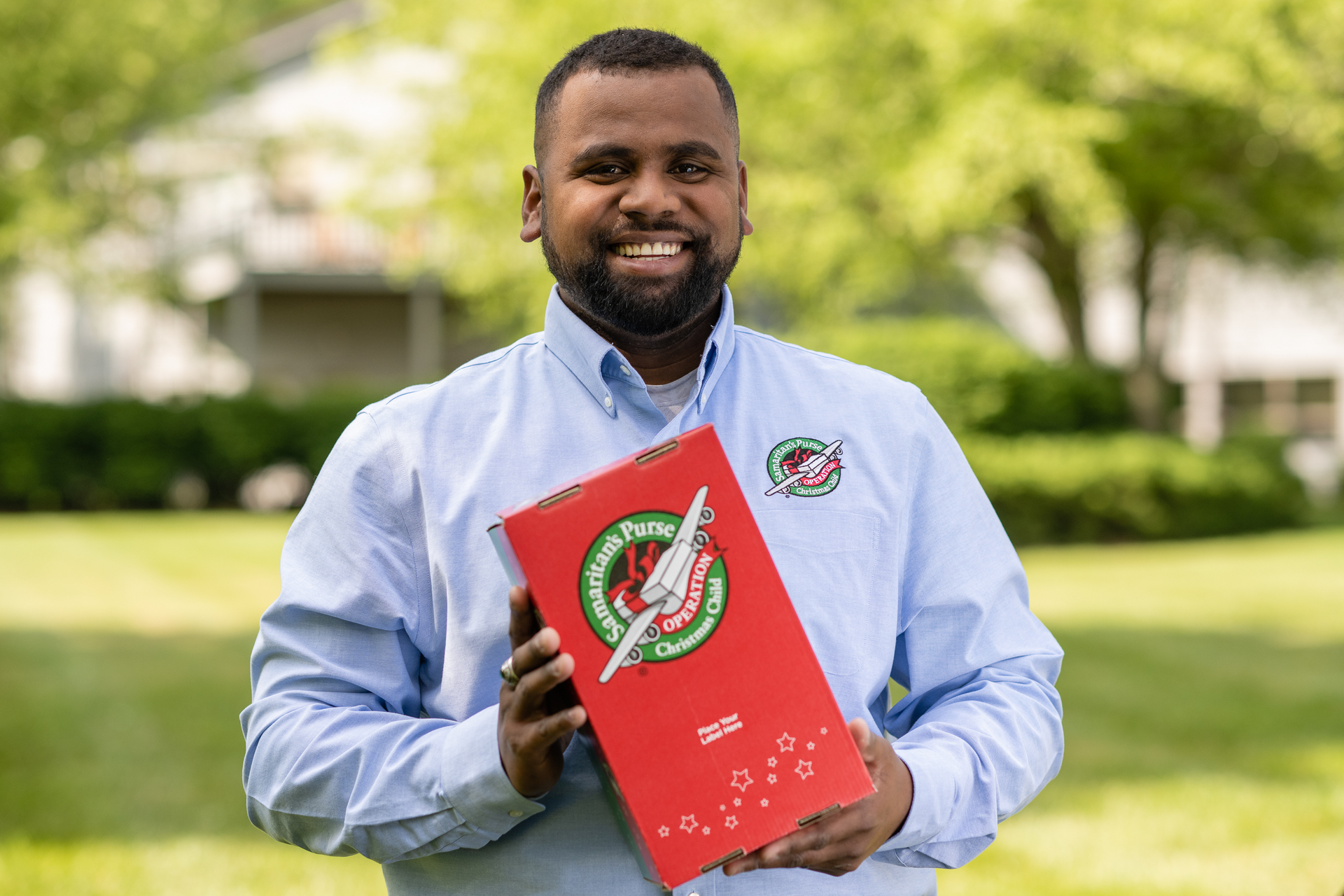
My name is Sakiusa Rokovasa Vakadewatabua, Jr. But I go by Zac. I grew up in Fiji, an island nation in the middle of the Pacific Ocean. The International Date Line cuts straight through my country, meaning that Fiji is the first to see every new morning and new year. We are literally at the very end of the earth. Childhood there was different than you might expect. Fiji is rich in clear blue waters and warm temperatures, but my four siblings and I grew up playing with sticks and stones. Often kids in our neighborhood played rugby, Fiji’s national sport. Except no one could afford a ball. Instead we played with empty soda bottles, even after someone inevitably got hit in the face. I come from a long line of pastors, from my great-grandpa, to my grandpa, to my father, to me. My family lived right next to our church, positioned near the river which flooded during rainy season. Routinely my father and the men of our congregation trekked downriver to fetch pieces of the church that swept away. I gave my life to Christ at a young age during a revival camp in my grandmother’s village. Throughout my life, God continues to remind me of His faithfulness. One reminder of His love was through Operation Christmas Child. This specific Monday afternoon when I was nine, my mom oversaw a special outreach event to present the Gospel to children in our community. She already told me there was a surprise at the end, but as her son, my name would be the last called – just in case they ran out. All day at school, I prayed, “Please let my name be called!” At the event, I waited anxiously as my mom started calling names, first the kids from the community, then those who regularly attended Sunday School. Soon the celebration drowned out all my worry. Infectious joy burst from my friends and in my own heart as they received their shoebox gifts. Finally, with the last shoebox in hand, my mom called my name. Excitement shot me forward to retrieve my very own shoebox gift. From coloring books and pencils to a jump rope and racecars, all these colorful items kept coming out of my shoebox. I didn’t have these new things before! But the jaw-dropping item which most reminded me of God’s love was a bright yellow yo-yo. I only ever saw this toy in stores that were financially out of reach. Now here it was in my shoebox, a special gift just for me. That yo-yo meant more to me than simple plastic and string. It was a tangible gift from someone around the world, given in faith, to remind me of God’s love. Going through my shoebox, God brought to my mind Romans 5:8, “While we were yet sinners, Christ died for us.” I was a Christian before, but this moment was impactful. We are all undeserving. But someone spent their time, money, and resources just to pack this beautiful gift for a child at the ends of the earth. Somebody around the world thought of me. After God opened doors for me to move to the United States years later, He called me to pastoral ministry at my local church in Kansas. Soon after starting my position, I rediscovered Operation Christmas Child. The youth group participated every year, and the task of leading the project fell to me. Ecstatic, I told my church about how I received one of these shoebox gifts, and the news caught fire! For the kids in my youth group, this put a real face to the mission they were doing and gave them a renewed drive to serve the Lord. Watching those kids pack over a hundred shoebox gifts as an outpouring of God’s love to others around the world, I was so overwhelmed that I cried with joy. I remember one child in my youth group praying over the shoebox gifts, “Thank you for what I’ve been blessed with that I may bless other kids.” That’s when it hit me that these kids have a profound understanding of what it means to show God’s love. Being a part of someone’s discipleship journey is incredibly humbling. Whether through pouring into the church I serve in Kansas or through packing a shoebox gift for someone around the world – I know that God blesses such faithful ministry because of my own testimony. Packing a shoebox gift may look like a little thing, but the impact is profound. It’s the fingerprint of God. My shoebox gift shaped me and continues to shape millions of lives all over the world.

By Bishop Leah Gregory
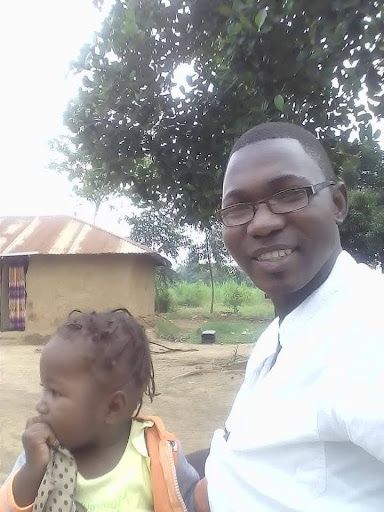
Introduction In the heart of Western Kenya, where survival is a daily struggle, my journey began as the firstborn of twelve children from peasant parents. Life was marked by hardship and deprivation; often, we went without food, and the concept of a proper meal felt like a distant dream. My mother, a beacon of hope, tirelessly mended my torn clothes, preparing me for school against all odds. Despite overwhelming challenges, a flicker of hope emerged through the generosity of a local church that saw potential in me. Their unwavering support lit a path I once thought was forever closed. This is my story—a testament to resilience, determination, and the transformative power of education.

Scripture: “ Never will I leave you; never will I forsake you.” – Hebrews 13:5 (NIV) “Draw near to God, and He will draw near to you.” – James 4:8 (NIV) Devotional Thought: Life doesn’t always make sense. It’s not always fair. Hard things happen—sometimes in waves that threaten to pull us under. I know this truth deeply and personally. In just four years, I lost all four of my grandparents. My first husband abandoned me and our daughter. I endured two miscarriages, battled ovarian cancer, and underwent surgery. At age 31, I lost my second husband suddenly to a heart attack. These losses cut deep. I entered a season of addiction—dark, consuming, and isolating. And yet—God. Fourteen years ago, I had an encounter with the living God. In that sacred moment, I met Jesus Christ as my Lord and Savior. That encounter changed everything. Fourteen years later, I am still in recovery, still walking in grace, still held together by the One who promised never to leave me or forsake me. His Word became my anchor. “Never will I leave you; never will I forsake you.” (Hebrews 13:5) “Draw near to God, and He will draw near to you.” (James 4:8) Even when doctors discovered three blood clots in the language center of my brain, God was with me. I made a full recovery. In the valleys and the victories, I have experienced His faithfulness. I’ve learned to love even when betrayed. I’ve grieved deeply, most recently losing my mother suddenly. Grief and I have walked together for many years. Yet, the wounds God healed in earlier seasons have helped me walk through new pain with hope, not despair. One thing I know for sure: bad things happen in this world. We don’t get to choose when or how. We do, however, get to choose how we respond. There are hurting people all around us—not just across the world, but right down the street. We can choose to step out of our comfort zones, meet people where they are, and be vessels of compassion and encouragement. Focusing only on the chaos of the world drains our energy and shifts our focus from what God is calling us to do right here, right now. You may not be able to control the world, but you can control your response. You can choose love. You can choose grace. You can choose to draw near to God—and He will draw near to you. Reflection Questions: Where in your life have you seen God remain faithful, even in pain? Are you focusing on things you can’t control, or are you letting God use you where you are? Who in your community might need encouragement today? Prayer: Lord, thank You for never leaving me, even when I felt abandoned or broken. Help me to keep my eyes on You, not on the chaos around me. Teach me to be an encourager, a light, and a vessel of Your love to those around me. May my story, my scars, and my healing all bring glory to You. In Jesus’ name, Amen.

By Tena Griggers, from the North Georgia Annual Conference